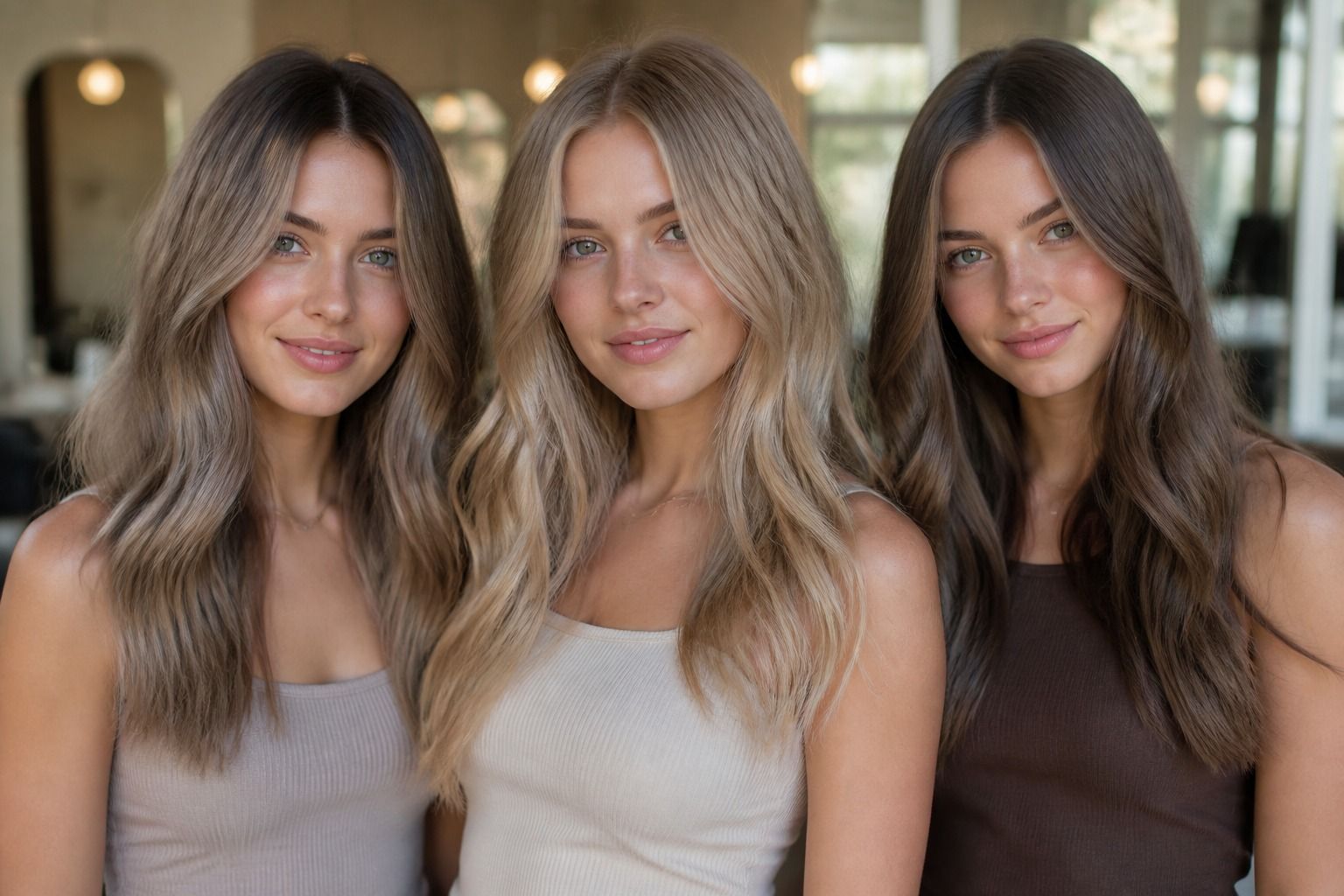
The best Cool Summer hair color usually looks quieter than the shade that first catches your eye on a salon swatch. That is the point. This palette tends to work with cool or neutral-cool coloring, moderate contrast, and a softness that can be lost under a very golden blonde or a hard blue-black. I would judge a color by what it does to the face in ordinary daylight, beside the eyes and eyebrows, rather than by the name printed on the box. Ash brown, muted beige blonde, rose brown, and a cool brunette can all work, but their depth and finish matter as much as their temperature.
What cool means in a Summer hair color
Cool does not mean that every strand has to look gray, silver, or blue. It means the color has less visible yellow, orange, or red than a warm version at the same depth. A medium ash brown can still look soft and natural. A beige blonde can have a creamy surface while remaining balanced because its base is not strongly yellow. The useful distinction is between the color you see in the hair and the cast that appears when light moves through it.
Cool Summer is often placed between True Summer and Soft Summer, but those labels are guides rather than laboratory results. True Summer coloring can tolerate a clearer cool direction, while Soft Summer often looks better with a dusty, blended finish. Someone close to the border may suit a cool brunette with a little beige in it more easily than a flat ash shade. I have seen the same ash formula look polished on one person and tired on another simply because the first person had more natural contrast around the eyes.
A practical check is to look at three parts of the face separately: the skin around the mouth, the whites of the eyes, and the natural brow. If a new shade makes the skin look greenish, brings out purple shadows, or makes the brows look disconnected, the problem may be a mismatch in temperature or depth. That check tells you more than deciding whether your skin is pale, olive, or pink. Undertone is not a shortcut that can choose a hair color by itself.
Blonde and brunette directions that stay soft
For a blonde, start with the difference between cool blonde and icy blonde. Cool blonde can include ash, pearl, smoky beige, and a restrained champagne tone. Icy blonde is much brighter and more reflective, so it creates stronger contrast at the roots and around the eyes. A Cool Summer can wear it, especially with light natural hair and defined brows, but it is less forgiving when the complexion already looks muted. A soft ash blonde or beige blonde often keeps the whole face in the same visual volume.
Ash brown is one of the easiest starting points because it gives the hair shape without making the color the only thing people notice. Mushroom brown sits in a similar family, although the result can turn flat if the stylist removes too much warmth and adds no variation in depth. For a little more color, rose brown can be useful. The rose should read as a muted berry or dusty mauve reflection, not a bright red wash. On dark hair it may appear only when the light catches it, which is often enough.
Cool brunette is a broad term, so ask what the colorist means before agreeing to it. It may refer to ash brown, neutral espresso, smoky chocolate, or a nearly black shade. These do not behave alike. A neutral espresso can be forgiving, while a very blue-black can make a low-contrast face look sharper than intended. I prefer a cool brunette that has a visible brown base in daylight. It looks deliberate indoors and does not turn into a single dark block in photographs.
The spelling changes between American and British English, but cool summer hair colours still describe the same family of choices. The formula matters more than the label, especially when a salon uses cool to mean anything from smoky brown to platinum.
| Direction | Best starting depth | What to check | How it usually fades |
|---|---|---|---|
| Soft ash blonde | Light to medium | Whether the roots overwhelm the brows | Yellow becomes visible first |
| Beige blonde | Light | That the beige stays muted, not golden | Turns creamier with washing |
| Ash brown | Medium | That the face still has enough brightness | Can reveal a soft copper cast |
| Rose brown | Medium to dark | That the rose reads dusty rather than red | Pink reflection fades before the brown |
| Cool brunette | Medium to deep | That it does not become blue-black | Warmth may show at the lengths |
The table is a starting map, not a promise about the final formula. Existing color, porosity, and the amount of light in the hair can shift the result. A shade that looks neutral in a bowl may look warmer after it meets previously lightened ends. That is why I would rather choose a direction and a depth than bring a single internet photo and expect it to translate exactly.
Choosing depth without losing your natural contrast
Depth is the part of cool summer hair colors that gets overlooked. People often decide that a color is wrong because it is warm, when it is actually too light or too dark. If the hair is much darker than the brows and eyes can support, the face may look outlined. If it is much lighter than the natural features, the complexion can lose its center and the roots may look heavy within a few weeks.
Begin with the natural hair at the root, even if you plan to lighten it. Notice whether the brow is pale and soft, medium brown, or deep enough to create a clear frame. Then look at the eyes from a normal distance, not with a phone camera pressed close to the face. A medium ash brown usually keeps moderate contrast intact. A dark cool brunette may suit someone with naturally dark brows, but it can be too severe for a person whose eyes, brows, and skin sit close together in value.
There is no rule that Cool Summer hair must be light. A medium-to-deep cool brunette can look calm and expensive without using black. The safer route is to keep some brown or smoky softness in the formula and make the ends a fraction lighter through natural variation. Solid color at one deep level can be less flattering than a darker root with a softened mid-length, even when both formulas have the same temperature.
Lightening needs the same restraint. A very pale blonde removes much of the visual relationship between hair and skin, so the rest of the face has to carry more contrast through brows, lashes, or clothing. If you prefer low-maintenance color, a medium beige blonde with a slightly deeper root may be easier to live with than an almost-white result. It still reads light, but the regrowth does not arrive as a hard line.
Root shadows, highlights, and glosses that make the color livable
A root shadow is useful when it connects a lighter shade to the natural base, but it should not be treated as an automatic fix. The shadow needs to sit in the same temperature family as the lengths. A cool beige blonde with a flat gray root can look dirty, while a warm brown root can pull the entire style toward gold. The most convincing root is often close to the natural hair, softened at the edge, and only a little deeper than the mids.
Ask where the transition will begin. A shadow placed right at the scalp can be tidy on day one and obvious as it grows. A slightly blurred transition through the first few centimeters tends to age more quietly, especially when the natural hair is medium brown. This is a maintenance decision, not merely a finishing detail. The same shade may need a root refresh after several weeks while the lengths only need a gloss.
Gloss is where a cool color can either settle into place or become lifeless. A clear gloss adds shine without changing the tone much. A tinted gloss can reduce yellow or copper, but it should not be used as a permanent substitute for a balanced base. On porous ends, cool pigment may grab unevenly and look smoky in patches. I would test the most porous section first and keep the first toning service conservative.
Highlights also need spacing. Fine, scattered pieces around the face can brighten an ash brown without turning the whole head blonde. Wide, high-contrast stripes usually compete with the softness that makes the palette work. If you want movement, ask for a difference you can still see when the hair is tied back. That usually means varied placement and a gloss over the result, rather than adding more and more light pieces at every appointment.
How to tell when the shade has turned too warm
Warmth rarely appears all at once. On blonde hair, the first sign may be a yellow cast near the crown. On brown hair, it is more often a copper or reddish reflection at the ends. The face may look more flushed, the under-eye area may seem darker, or a cool gray sweater that used to look clean may suddenly make the hair appear orange. I would compare the color in a north-facing window or outdoors in shade, because bathroom bulbs can add their own yellow filter.
Separate the problem into temperature and condition. Dry, porous hair reflects light unevenly and can look warmer even when the formula has not changed much. A faded gloss may also reveal the underlying pigment that was exposed during lightening. If the roots remain balanced but the lengths turn warm, the issue is probably the fade pattern or porosity. If the whole head looks golden, the original formula or the water and products used at home may be contributing.
Blue and violet products can help with a mild shift, but more pigment is not automatically better. Violet is aimed at yellow; blue is generally used against orange. A product that is too strong can leave pale hair dull or slightly lavender and can make porous brown ends look inky. Use a small amount, follow the timing on the product, and judge the result after the hair is dry. A mirror view with wet hair is a poor basis for a color decision.
When the unwanted warmth is strong, a new toner may not solve the underlying issue. Hair history matters: permanent dye, old highlights, henna, heat damage, and repeated home coloring can all change how a formula behaves. A careful consultation should identify what is already in the hair before anyone promises a correction. There is no universal cool summer hair color that cancels every warm result in one appointment.
Most cool summer hair color ideas come back to the same practical choice: keep enough softness and depth that the color supports the face instead of becoming its outline. For many Cool Summer clients, that means a softened ash brown, a muted beige blonde, or a cool brunette with enough brown to keep the face from looking stark. Keep an eye on depth as well as temperature, give the root transition room to grow out, and treat gloss as a small adjustment rather than a rescue plan. The right cool hair color does not demand constant explanation; it simply lets the eyes, skin, and expression stay in charge.